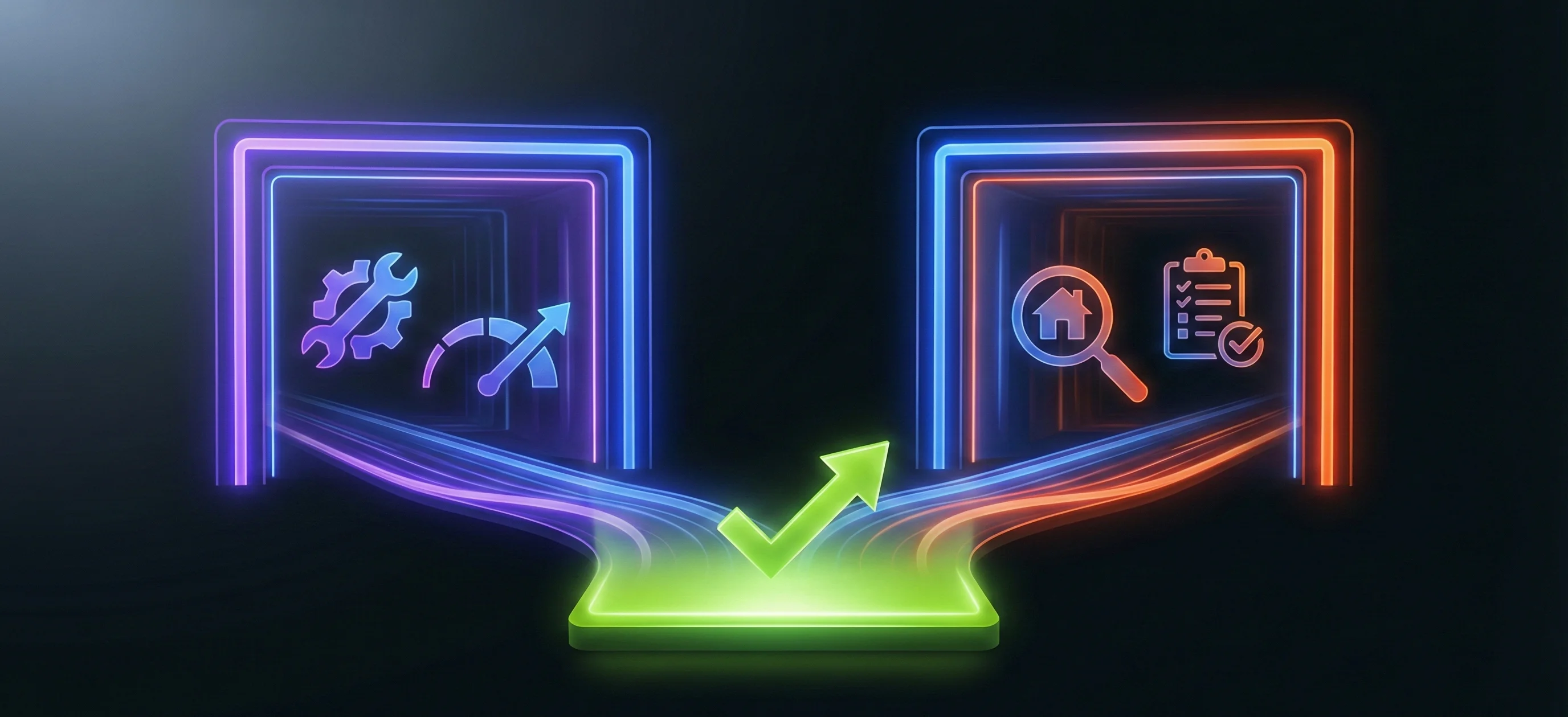
OEM Lifecycle Intelligence
One accurate model for every home
The same calibrated model supports qualification, design, commissioning checks, and fleet learning across the OEM lifecycle.
The problem
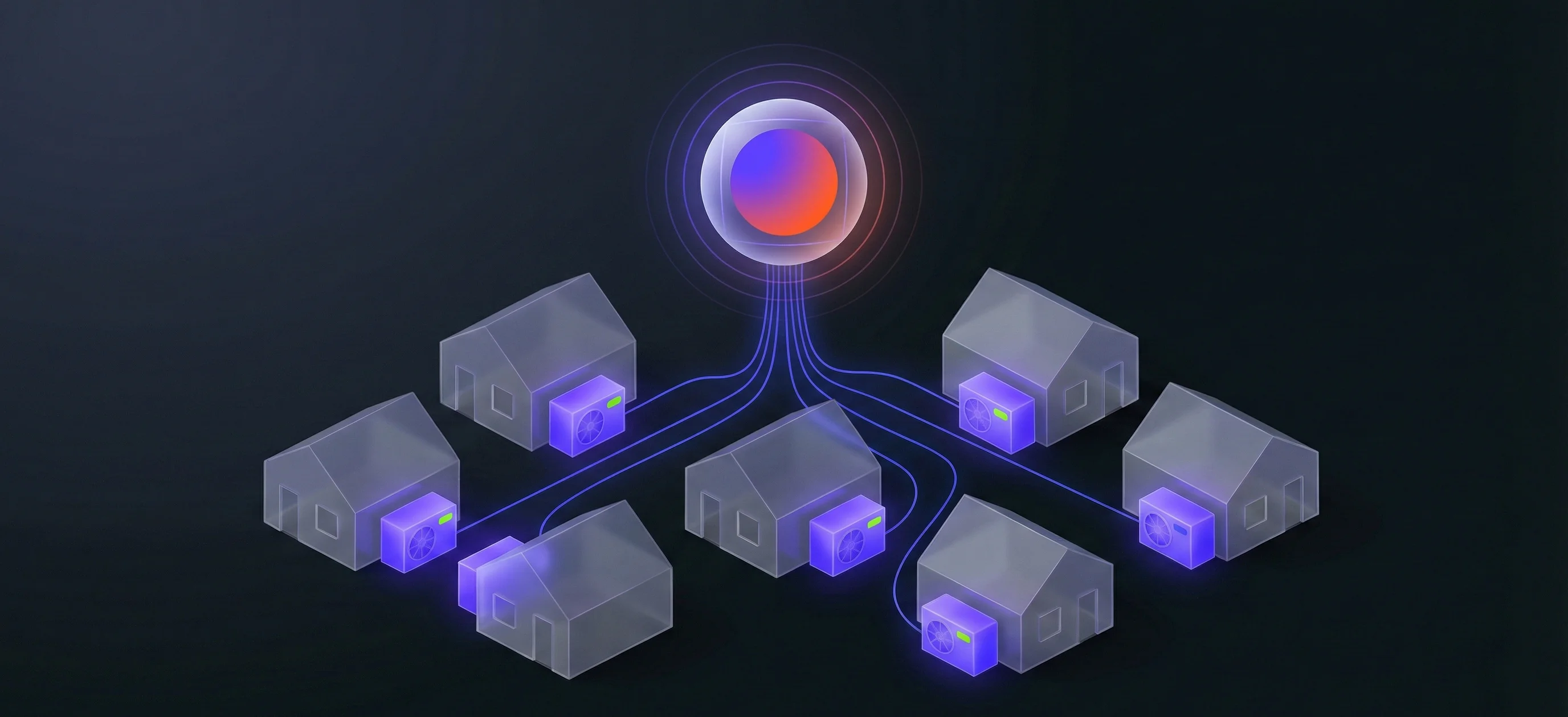
OEMs do not have a continuous view of the home across the lifecycle.
The same home is touched by commercial teams, designers, installers, commissioning teams, service teams, and compliance leads. But most organisations still work from isolated snapshots rather than a dynamic view that stays useful as new evidence arrives.
Qualification starts from partial information
Commercial and technical teams can see some signals, but not one evolving picture of the home. That makes it harder to know which homes are ready now and which need staged work first.
Context gets lost between teams
As work moves from assessment to design to installation and service, assumptions and decisions are often handed on as outputs, not carried forward as a living case.
The view stays static when it should be dynamic
Survey inputs, design outputs, installer records, and telemetry often sit in separate systems, leaving teams with snapshots instead of a view that updates as new evidence arrives.
What Aeterno does
We keep the lifecycle connected.
In simple terms: Aeterno keeps one record of the job, gives each team the right view of it, and turns verified outcomes into better future decisions.
Keep one record of the job
Property context, assumptions, recommendations, evidence, and outcomes stay attached to the same case as work moves forward.
Give each team the right view
Commercial, design, installer, service, and compliance teams work from the same underlying record instead of rebuilding context from scratch.
Turn verification into fleet learning
Predicted versus observed performance feeds back into partner enablement, service diagnostics, and future qualification and design logic.
How it works
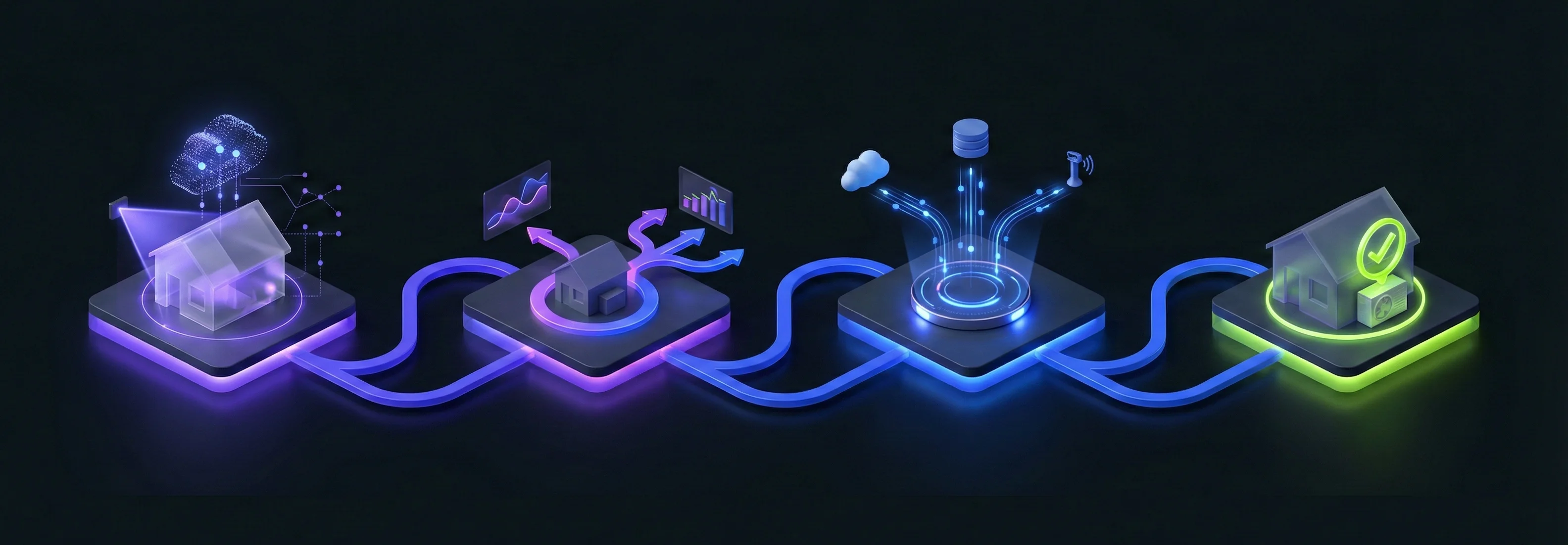
The same case stays useful from qualification to fleet learning.
Each stage adds context, evidence, and outcomes, so the next team starts from more truth, not less.
Where teams start
Start with one module, not a platform rewrite.
Most OEM teams start where the current friction is highest, then expand into the rest of the lifecycle once the same record proves useful across more teams.
HEM Access
Give product and engineering teams a maintained workflow for Home Energy Model scenarios, product data mapping, archetype comparison, and repeatable R&D outputs.
Qualification
Assess which homes are suitable now, which need staged work, and which should not progress yet, with support for customer-specific qualification logic.
Design Studio
Produce room-by-room designs with clearer assumptions, faster handoff, and installer-ready outputs.
Commissioning Verification
Compare predicted and observed performance quickly, surface installation risk, and create quality evidence packs.
Fleet Assurance
Spot drift across the installed base, reduce service surprises, and learn from verified field outcomes.
Business impact
What changes when the lifecycle stays connected.
The practical payoff is not abstract platform value. It shows up in conversion, design quality, partner delivery, service, and risk control.
Commercial
Qualify the right opportunities earlier and move good-fit jobs forward with more confidence.
Design & Technical
Keep design logic, evidence, and installer outputs aligned around the same job record.
Partner Operations
Scale quality across installer networks without forcing every partner into one brittle process.
Service
Use predicted versus observed performance to diagnose drift sooner and arrive prepared when dispatch is needed.
Compliance & Risk
Keep a record of what was believed, recommended, installed, and verified at every stage.
FAQ

Start where the friction is highest
Most OEM teams start with HEM Access, Qualification, Design Studio, or Commissioning Verification, then expand once the same record proves useful across more of the lifecycle.